How Chinese Snack Brands Cracked the Code of "Affordable Quality" – And Why East Africa (Kenya, Tanzania, Rwanda) Is Their Next Goldmine
The Aussi Team · August 2, 2026
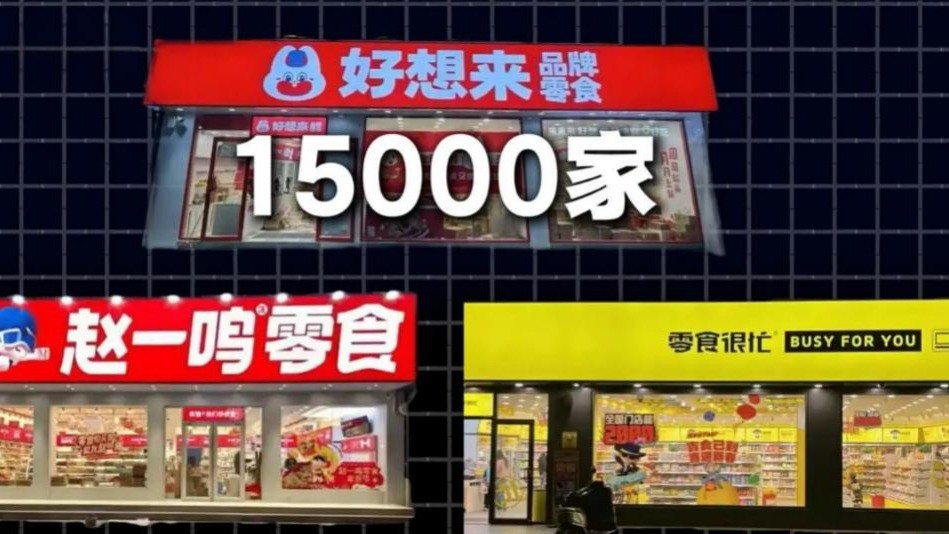
If there’s one thing Chinese snack brands have mastered in the last decade, it’s this: giving customers the impossible trinity—great taste, reliable quality, and shockingly low prices—all while building billion-dollar empires in the process. . For entrepreneurs in East Africa (and anyone eyeing the region’s fast-growing consumer markets), the real magic isn’t just the products—it’s the revolutionary business and supply chain models behind them.
Let’s break down the playbook: how top Chinese snack brands built their dominance, the supply chain innovations that make it all work, and the actionable opportunities for entrepreneurs in Kenya, Tanzania, and Rwanda to adapt these models for local success.
First: The 3 Game-Changing Business Models Behind China’s Snack Boom
Chinese snack brands didn’t win with luck—they won by designing models that align with what actual consumers want: convenience, value, and consistent quality. Forget everything you think about "cheap snacks"—these are precision machines built for scale.
1. The Bulk Discount Chain Model: "Luxury Snacks at Grocery Store Prices" This is the model that took China’s lower-tier cities by storm and created two of the country’s fastest-growing retail giants: Mingming Henmang 鸣鸣很忙 (19,000+ stores, HK$900 billion market cap) and Wanchen Group’s Haoxianglai 好想来 (15,000+ stores).
Here’s how it works:
Kill the brand premium: Instead of selling heavily advertised national brands, these stores source directly from the same top manufacturers that make fancy packaged snacks. They skip the celebrity endorsements, flashy packaging, and marketing costs—passing 30-50% savings straight to customers. .
Cut out every middleman: The traditional snack supply chain is a nightmare of markups: Factory → provincial distributor → city distributor → local shop → you. Each layer adds 8-15% to the price. These bulk chains? They ship directly from factories to regional warehouses to stores. No middlemen, no extra costs. .
Conquer the neighborhood: They follow a strict 500-meter density rule—placing stores so close together that customers never have to travel more than a few minutes for a snack. It’s the ultimate defense against both e-commerce and rival retailers. .
This model isn’t just "cheap"—it’s efficient. And for price-sensitive consumers in emerging markets, it’s pure catnip.
2. The Vertically Integrated Premium Model: "Control the Supply Chain, Control the Market" If the bulk chains win by cutting out middlemen, Three Squirrels—China’s leading nut and snack brand—won by building its own supply chain from the ground up. .
What started as a purely online D2C brand in 2012 has transformed into a manufacturing powerhouse. After a brush with stagnant growth in 2022, the company pivoted to a "high-end cost-performance" strategy—meaning premium-quality snacks at mid-range prices—by taking full control of its supply chain. .
Its secret weapon: a composite manufacturing model that combines self-built factories, joint production facilities, and carefully vetted OEM suppliers. Core categories like nuts are made in its own 80,000+ square-meter supply chain bases (there are four, in Anhui, Tianjin, Sichuan, and Guangdong). Other snacks come from partner factories, with only the most peripheral categories left to third-party suppliers. .
This model lets Three Squirrels guarantee quality, keep prices stable, and launch hundreds of new products every year—all while maintaining higher margins than its competitors. .
3. The Omnichannel Digital Premium Model: "Meet Customers Where They Are" For snack brand Bestore, the key to success is combining the best of online and offline retail—using physical stores as fulfillment centers and data to personalize every customer interaction. .
Bestore built its business on "premium snacks accessible to everyone," and it can only deliver that promise with a supply chain as smart as it is efficient. Back in 2015, it partnered with IBM and SAP to build a big data system that connects its entire operation: online stores, offline shops, inventory warehouses, and even raw material suppliers. This system tracks real-time sales data, predicts which products will sell where, and automatically adjusts inventory across all channels. .
The result? A customer can order snacks on Bestore’s app in the morning and pick them up from a neighborhood store that afternoon—with the product pulled from the nearest warehouse, not a distant distribution center. This omnichannel approach cuts logistics costs by 20% and ensures snacks stay fresh from the warehouse to the customer’s hand. .
The Supply Chain Innovations That Make These Models Unstoppable
Every great retail model lives or dies by its supply chain. Chinese snack brands didn’t just tweak the traditional supply chain—they reinvented it, solving problems that have long stymied food businesses in emerging markets. These innovations are the real reason they can keep prices low and quality high.
1. Radical Simplification: Eliminate All Unnecessary Middlemen This is the foundation of every Chinese snack brand’s cost advantage. Traditional snack retail chains are bloated with layers of distributors, each taking a cut. By sourcing directly from factories and shipping straight to stores, brands like Haoxianglai and Mingming Henmang slash distribution costs by more than 30%—savings they pass on to customers. .
This isn’t just about cutting costs—it’s about control. When you work directly with manufacturers, you can set quality standards, adjust production on the fly, and ensure consistent product across every store.
2. Vertical Integration: Own the Supply Chain, Start to Finish The most successful brands don’t just use suppliers—they partner with them, invest in them, and in many cases, build their own production facilities. Three Squirrels is the perfect example:
It operates four massive supply chain bases across China, where it manufactures core products like its bestselling daily nuts. .
In 2025, it opened a nut processing factory in Cambodia, part of its "localized production" strategy. By sourcing raw materials locally in Southeast Asia and processing them on-site, it cuts down on long-haul logistics costs and avoids the high tariffs associated with exporting finished goods from China. .
It even controls the upstream supply chain, partnering directly with large-scale nut farms in China’s Yunnan, Guangxi, and Xinjiang regions, as well as with international agricultural leaders like Ocean Spray and Wonderful. .
This kind of vertical integration isn’t just for big brands—smaller players can adapt it by partnering directly with local farmers and co-packers to cut out middlemen.
3. Localized Production: Make Snacks Where You Sell Them Three Squirrels’ Cambodia factory highlights a key strategy for overseas expansion: localized production. Instead of making products in China and shipping them abroad—an expensive, slow process—brings core manufacturing close to the end market.
This approach has three huge benefits:
Lower logistics costs: No more shipping heavy, low-margin snacks across the ocean.
Tariff savings: Finished food products often face high import duties, but raw agricultural materials are usually cheaper to bring in.
Freshness: Local production means snacks spend less time in transit, so they’re fresher when they hit store shelves. .
It’s a strategy that’s tailor-made for East Africa, with its abundant agricultural resources and growing local manufacturing sector.
4. Data-Driven Inventory Management: Stop Wasting Food (and Money) Snacks are a perishable product—every day a bag of nuts sits in a warehouse, it loses freshness and value. Bestore solved this problem by building a full-link digital supply chain system. It uses big data to analyze real-time customer purchases, trends on social media, and even local weather forecasts to predict exactly how much of each product to send to each store. .
This isn’t just guesswork—it’s a closed-loop system: Sales data from physical stores and online platforms feeds into a central algorithm, which adjusts inventory levels and production schedules accordingly. The result? Bestore cut its average inventory turnover time by 30% and reduced food waste by nearly a quarter—critical improvements in a low-margin business like snack retail. .
Why East Africa (Kenya, Tanzania, Rwanda) Is the Next Frontier for These Models
China’s domestic snack market is already crowded and hyper-competitive—so it’s no surprise that its leading brands are looking overseas. East Africa, in particular, has all the right ingredients to replicate China’s success story: a fast-growing consumer class, improving retail infrastructure, and—most importantly—abundant raw materials that align perfectly with China’s top snack categories. .
Let’s break down the opportunity country by country:
🇰🇪 Kenya: The Regional Retail Powerhouse Kenya is East Africa’s largest and most advanced consumer market, with a packaged food sector that hit $5.1 billion in 2024—driven by a rapidly expanding middle class and the explosive growth of modern supermarket chains like Carrefour, Naivas, and Quick Mart. .
What makes Kenya even more attractive? Its government has been aggressively improving trade and logistics infrastructure—including the expansion of the Mombasa Port and the development of special economic zones—to support regional distribution. This means entrepreneurs can not only serve Kenya’s 55 million people but also easily ship products to neighboring Uganda, South Sudan, and Somalia. .
The demand is already there: Kenyan consumers are increasingly looking for affordable, high-quality packaged snacks to fit their busy, urban lifestyles. Snack brands’ sweet spot—premium quality at mass-market prices—fits this demand perfectly.
🇹🇿 Tanzania: Raw Material Goldmine If Kenya is the region’s retail hub, Tanzania is its supply chain backbone. The country is one of East Africa’s top producers of cashew nuts, mangoes, pineapples, and sorghum—exactly the raw materials needed to make the nuts, dried fruits, and puffed grain snacks that fly off the shelves in China. .
Even better? Tanzania and China have a zero-tariff trade agreement that eliminates duties on hundreds of agricultural products. This means entrepreneurs can source high-quality local raw materials, process them into snacks locally, and even export finished products back to China or to other African countries—all with a significant cost advantage. .
Right now, Tanzania’s snack market is still in its early stages—there are no dominant national brands, and most local snacks are sold unpackaged in open markets. For entrepreneurs, this is a wide-open opportunity to build the region’s first large-scale packaged snack brand.
🇷🇼 Rwanda: Pro-Business, High-Growth Market Rwanda may be small, but it’s one of Africa’s fastest-growing economies and most investment-friendly markets. Over the past decade, the government has made it a top priority to develop its domestic food manufacturing sector—offering tax breaks, low-cost land, and streamlined business registration for entrepreneurs who set up local production facilities.
There’s already proof that Chinese-style snack brands can succeed in Rwanda: A local Chinese-owned company called PANDA FOOD [I saw their reel on Instagram] now produces a sponge cake similar to China’s popular Daliyuan brand. It’s sold in every major supermarket and neighborhood store in the country, and its sales have grown by double digits every year since launch. .
Rwandan consumers are increasingly demanding hygienically packaged, great-tasting snacks—and local suppliers are already struggling to keep up. For entrepreneurs, it’s the perfect test market to refine products and operations before scaling to larger countries like Kenya and Tanzania.
The Best Snack Categories to Adapt (Using Local East African Ingredients)
The key to success in East Africa is localization—don’t just copy Chinese products, reimagine them using local raw materials. Stick to categories that are easy to source locally, affordable to produce, and have proven mass-market appeal:
Roasted & Flavored Nuts: Cashews are Tanzania’s top agricultural export, and Kenya also produces high-quality nuts. Chinese brands’ signature spicy, garlic, and honey-roasted nut recipes are already popular with local consumers—replace Chinese nut varieties with East African cashews for a fresh, local twist. .
Dried Fruits: Tanzania and Kenya grow some of the world’s sweetest mangoes and pineapples. Chinese brands’ sugar-free dried fruit products are a perfect match for East African health-conscious consumers—all you need is a local fruit processing facility. .
Puffed Grain Snacks: Maize and sorghum are staple crops across East Africa. These grains can be processed into affordable, crispy puffed snacks—similar to the popular corn puffs in China—that are ideal for price-sensitive mass consumers. .
Healthy Bean Snacks: Roasted chickpeas and broad beans are already popular street foods in East Africa. Snack brands can add their signature spice blends to turn these local staples into packaged, high-protein healthy snacks. .
Extruded Snacks: Corn strips and potato chips are in high demand across East Africa. Local raw materials are readily available, and production equipment is relatively cheap to import from China. .
Here's My 5-Step Playbook to Build a Chinese-Style Snack Brand in East Africa
You don’t need to be a billion-dollar corporation to execute these models—you just need to adapt them to fit the local market. Here’s how to get started:
1. Source Local First (to Cut Costs and Boost Support) The biggest advantage you have over imported Chinese brands is access to cheap, high-quality local raw materials. Don’t import ingredients from China unless you absolutely have to. Instead, partner directly with smallholder farmers and agricultural cooperatives in Kenya, Tanzania, and Rwanda to source nuts, fruits, and grains. This will not only cut your logistics costs by up to 50% but also help you build goodwill with local governments and consumers. .
2. Build a Streamlined Supply Chain (No Middlemen) Take a page from the Chinese bulk chains’ playbook: Cut out as many middlemen as possible. Here’s what to do:
Partner directly with local food manufacturers to produce your snacks.
Rent a central warehouse in a major city like Nairobi or Dar es Salaam to serve as a regional distribution hub.
Use local logistics companies to deliver snacks directly to retail stores and markets.
This simple setup will help you keep costs low and maintain control over your product’s quality. .
3. Use Localized Production (Just Like Three Squirrels) You don’t need to build a massive factory on day one. Start small: Rent space in an existing food manufacturing hub or use a co-packer to produce your snacks. As your business grows, you can invest in your own production line. The goal is to make as much of your product locally as possible—this will help you avoid expensive import tariffs and reduce delivery times. .
4. Adopt an Omnichannel Sales Strategy (Meet Customers Where They Are) Chinese brands’ omnichannel approach is tailor-made for East Africa’s evolving retail landscape. Use this three-pronged strategy to maximize your reach:
Offline first: Start by distributing your snacks to small neighborhood convenience stores and local supermarkets—where 90% of East African consumers still shop for food.
Build an online presence: Use Instagram, Facebook, and TikTok to showcase your products and run targeted ad campaigns. East Africa’s social media user base is growing rapidly, and these platforms are the most cost-effective way to reach young, urban consumers.
Offer delivery: Partner with local last-mile delivery companies like Jumia Food or Glovo to offer online ordering and doorstep delivery. This is critical to serving the growing number of middle-class consumers who prefer to shop from home. .
5. Win on Quality and Price (Don’t Cut Corners) Chinese snack brands’ core advantage is that they offer premium-quality snacks at mass-market prices—and that’s exactly what you need to do to succeed in East Africa. Consumers here are price-sensitive, but they will pay a slight premium for snacks that taste great, are hygienically packaged, and are consistent in quality.
Never cut corners on raw materials or production to save costs—this will only erode consumer trust. Instead, use your supply chain efficiency to keep prices low while maintaining the highest possible quality. .
The Future of Snacks Is in East Africa
The same market forces that created China’s trillion-yuan snack industry are now at play in East Africa: a fast-growing population of young consumers, a rapidly expanding middle class, and a retail sector that is modernizing by the day.
Chinese snack brands have already solved the hardest parts of the business: how to make high-quality snacks cheaply, how to build a supply chain that can deliver them to every neighborhood, and how to market them to mass consumers. All that’s left is for local entrepreneurs to adapt these proven models to the unique needs of East African markets—leveraging local raw materials, building local production capacity, and designing products that fit local tastes.
This is a once-in-a-generation opportunity to build a regional consumer brand from the ground up. And the best part? You don’t have to do it alone.
Ready to build your own Chinese-style snack brand in East Africa? The biggest challenge for new entrants is navigating the complex cross-border supply chain—from sourcing raw materials and importing production equipment to setting up local distribution networks. That’s where we come in.
For end-to-end China-Africa cross-border business solutions—including supply chain setup, logistics support, and brand localization—contact Aussi Cross Border Services at www.aussigroup.com. Our team of experts has years of experience helping entrepreneurs bring food and beverage products to market in Kenya, Tanzania, Rwanda, and across the African continent.